

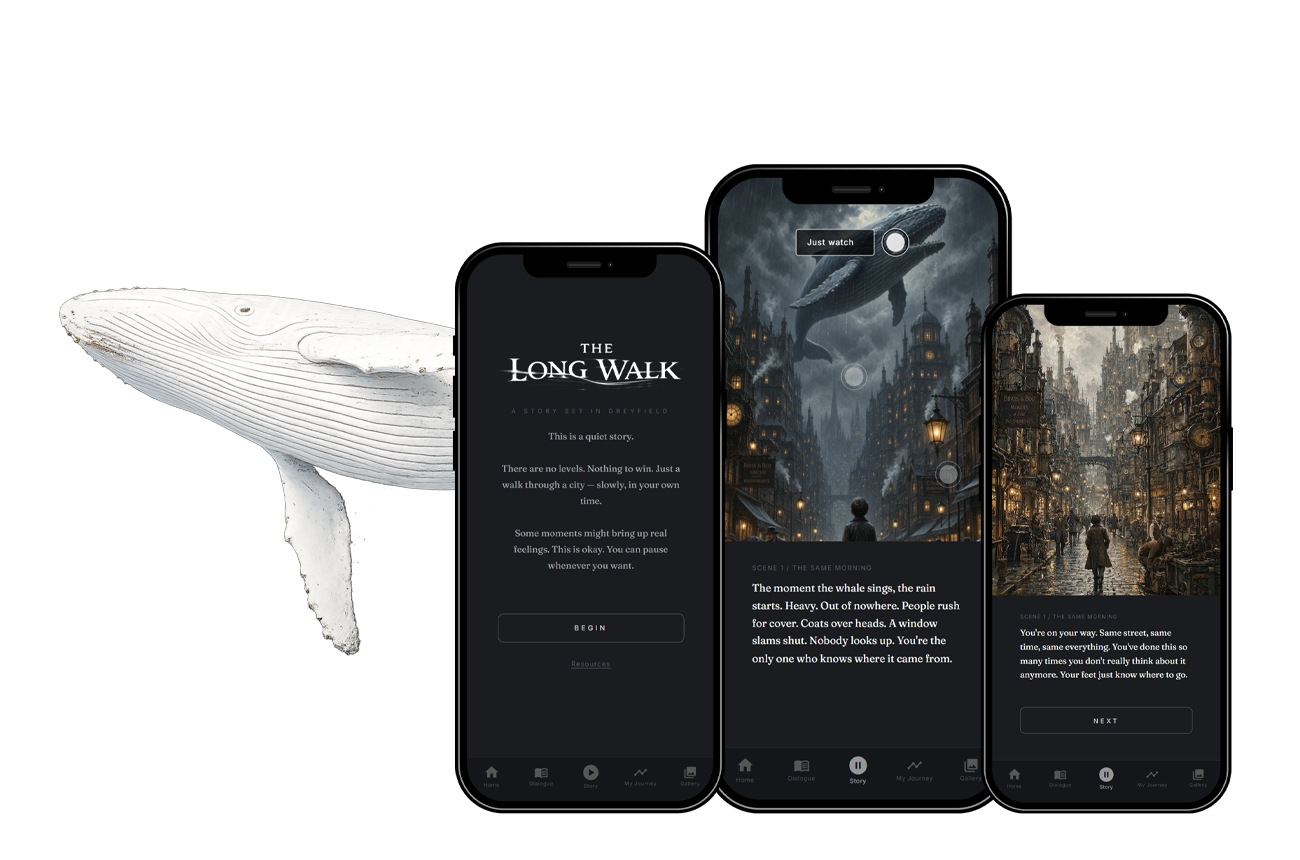
A web-based interactive story
where young adults explore emotions through interaction, not explanation.
Challenge
Young people often feel something they can't name and you can't work through a feeling you haven't noticed yet. Adolescence is when this matters most: emotional awareness is still forming, but the feelings already run deep.
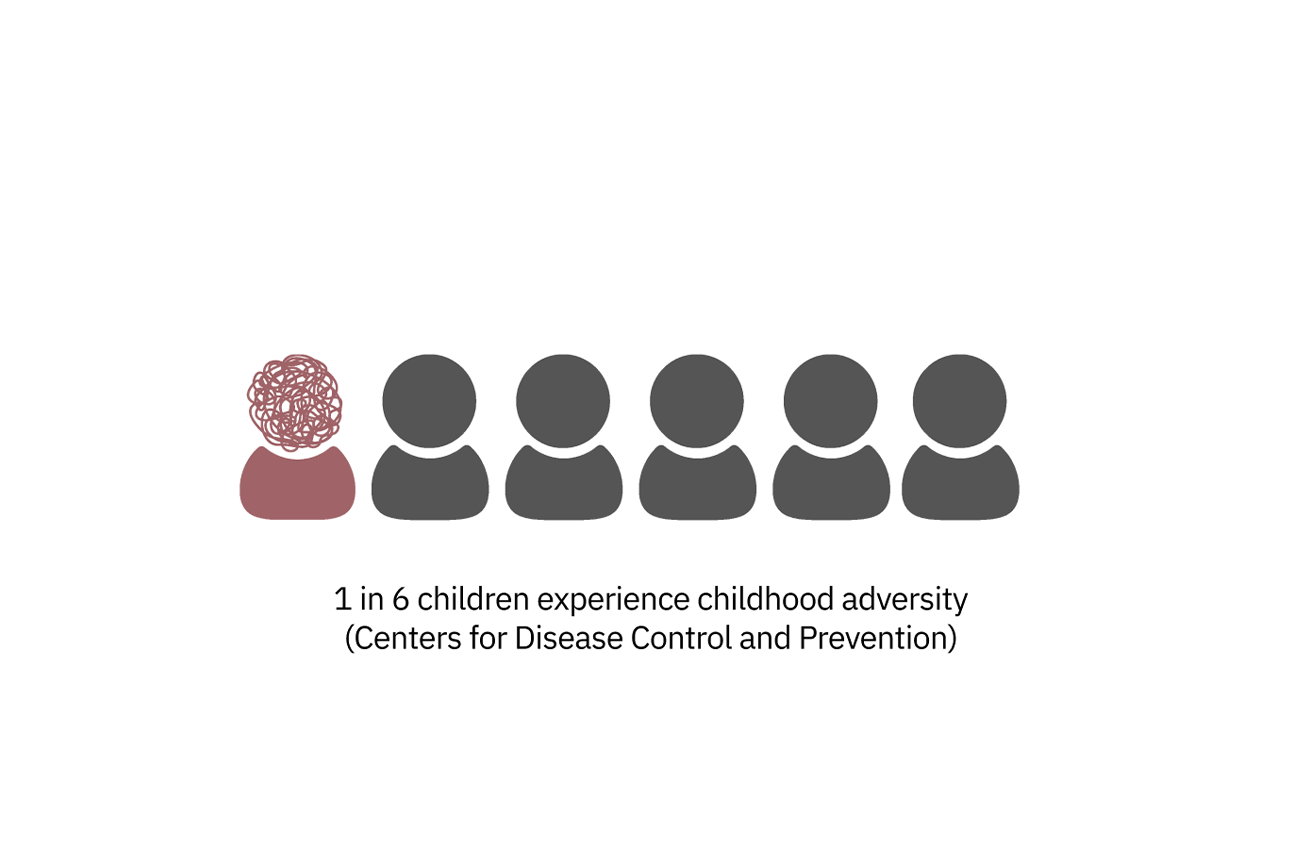
A Statistic from CDC
Primary Hypothesis
If young people experience a feeling through story rather than have it explained to them, then they can begin to notice and building the first step of emotional regulation rather than relying on being told what they feel.
Project Role
I was the sole designer, responsible for the concept, story, visuals, prototype, and user testing end to end. I consulted a psychology professor for ethical and emotional guidance and my capstone advisor for direction.
Concept · Narrative design · UX/UI · Prototyping · User testing
Figma Prototype
Project Description
A web-based interactive story that follows a white whale through a quiet city. Choices shape how the journey feels rather than where it ends, giving young people space to notice a feeling without naming it.
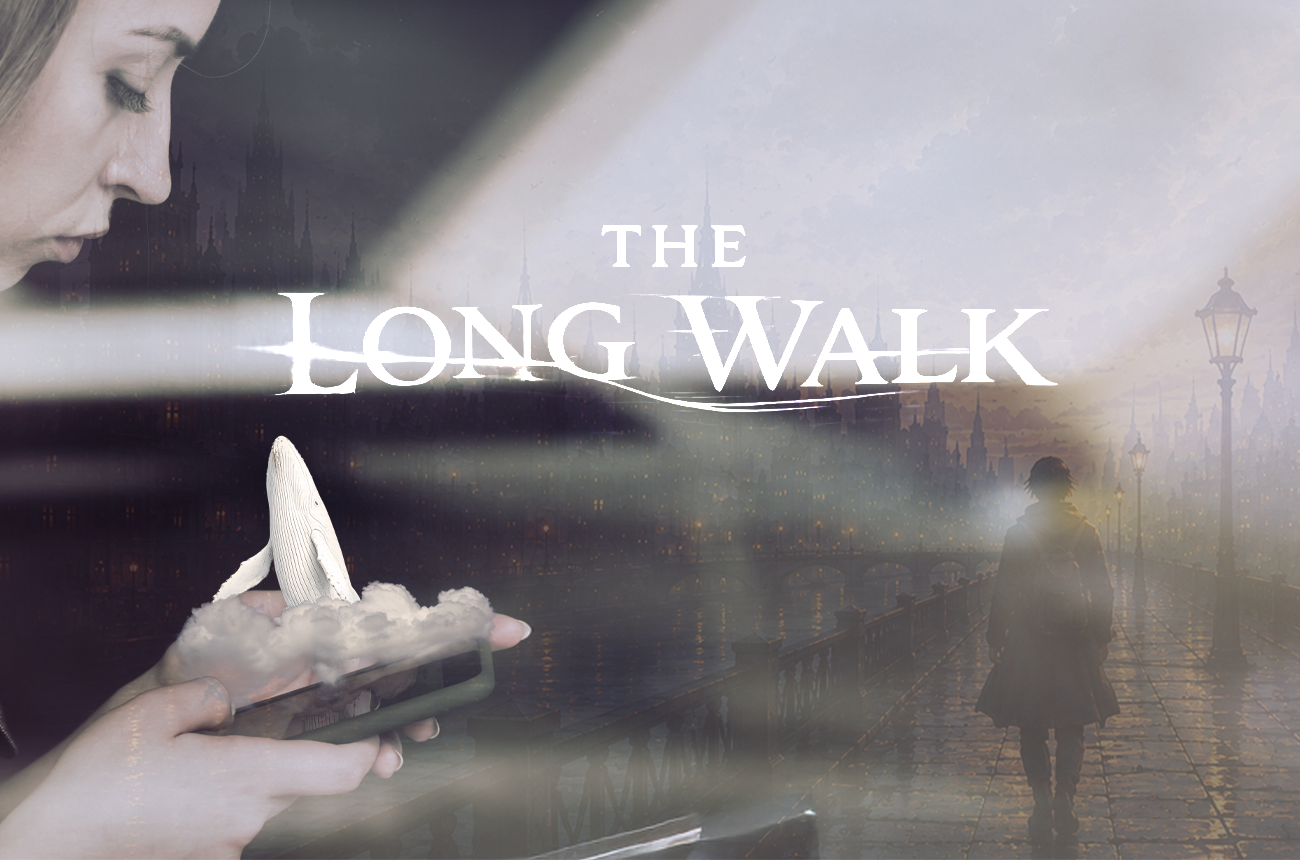
Hero image
Approach
How might I help young people notice a feeling they can't yet name, using interaction and story rather than explanation?
Research
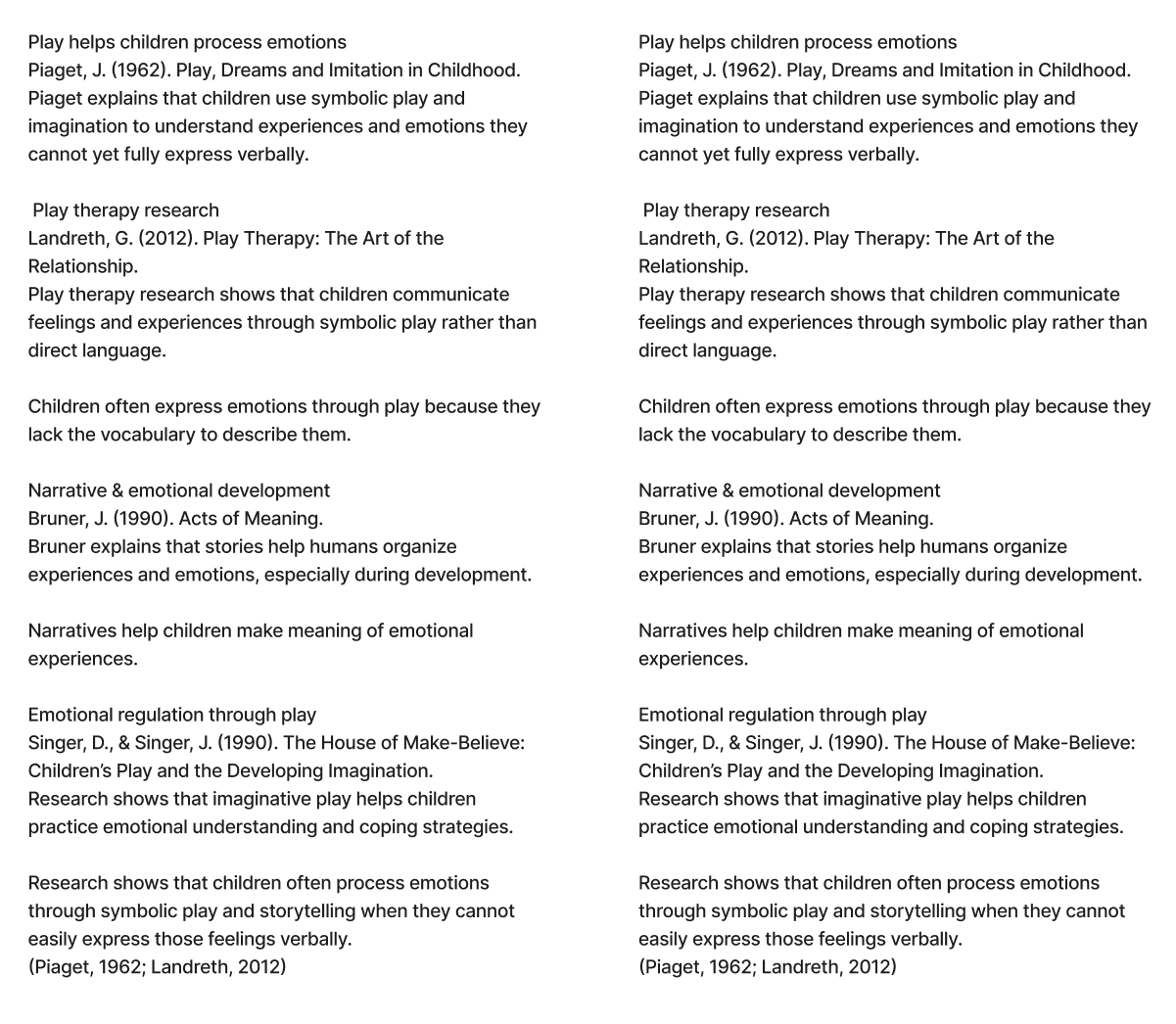
Two pieces of secondary research gave the project its backbone. James Gross's model of emotional regulation showed that regulation begins with noticing before reframing or managing anything.

That defined the scope. Singer's research on “imaginative play showed that children process emotions through experience”, not just language — which justified a story-based approach over a lesson.
Precedents

Key Findings
A competitive analysis of Betwixt and Depression Quest showed where existing tools explain or diagnose, revealing the gap for something that simply lets a feeling be noticed.
Insight
Emotional tools for this audience must protect space, not fill it. Delayed or over-explained feedback breaks the experience; restraint is what lets a young person sense a feeling for themselves. The design's job is to make an unnamed feeling legible without ever naming it for them.
Researching note
Journey & Empathy Mapping
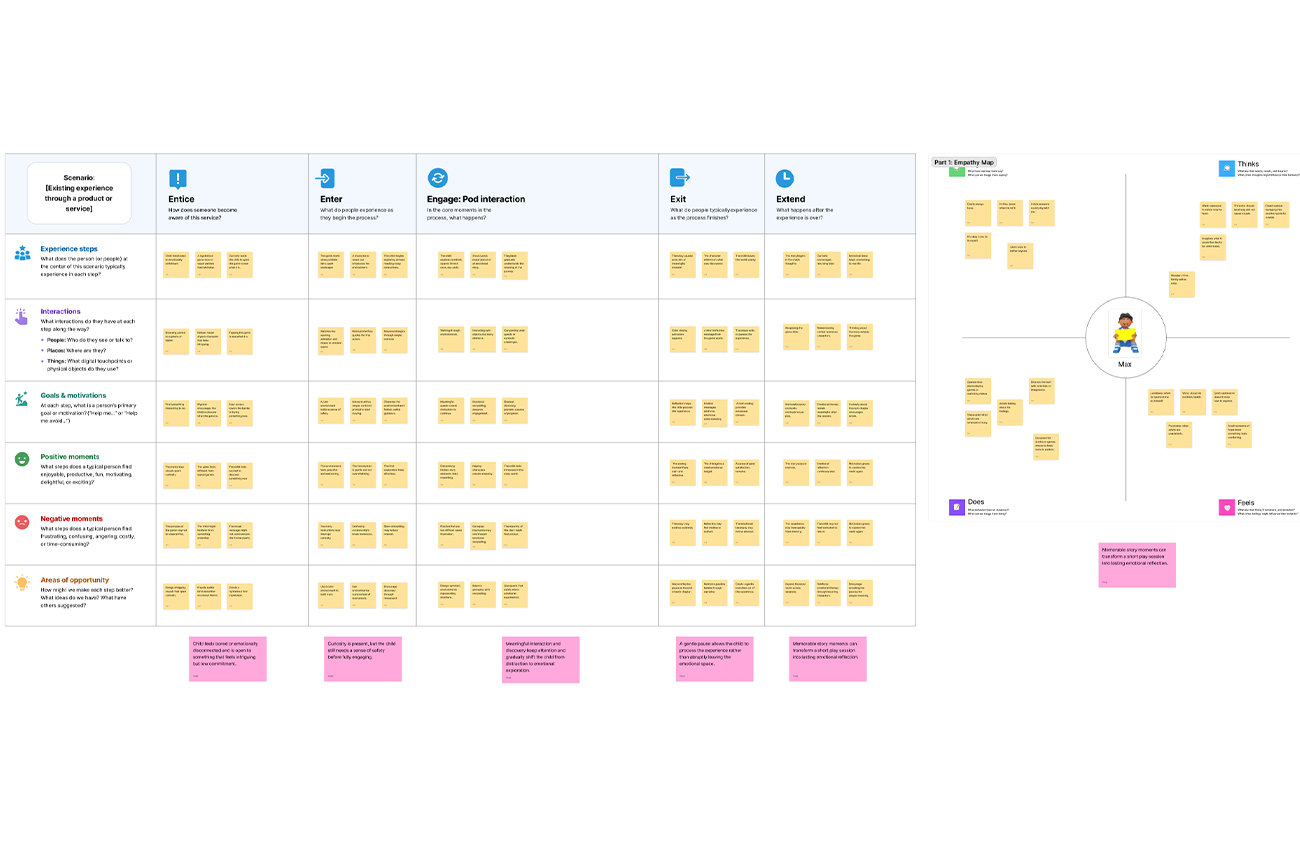
Mapping showed the emotional turning points weren't in the plot. They lived in the quiet in between moments, where a feeling could surface without being named.
Mapping Max's experience
The map made clear the design should prioritize pacing and space over packing in events. Emotional legibility came from restraint, not from more information.
Narrative Structure
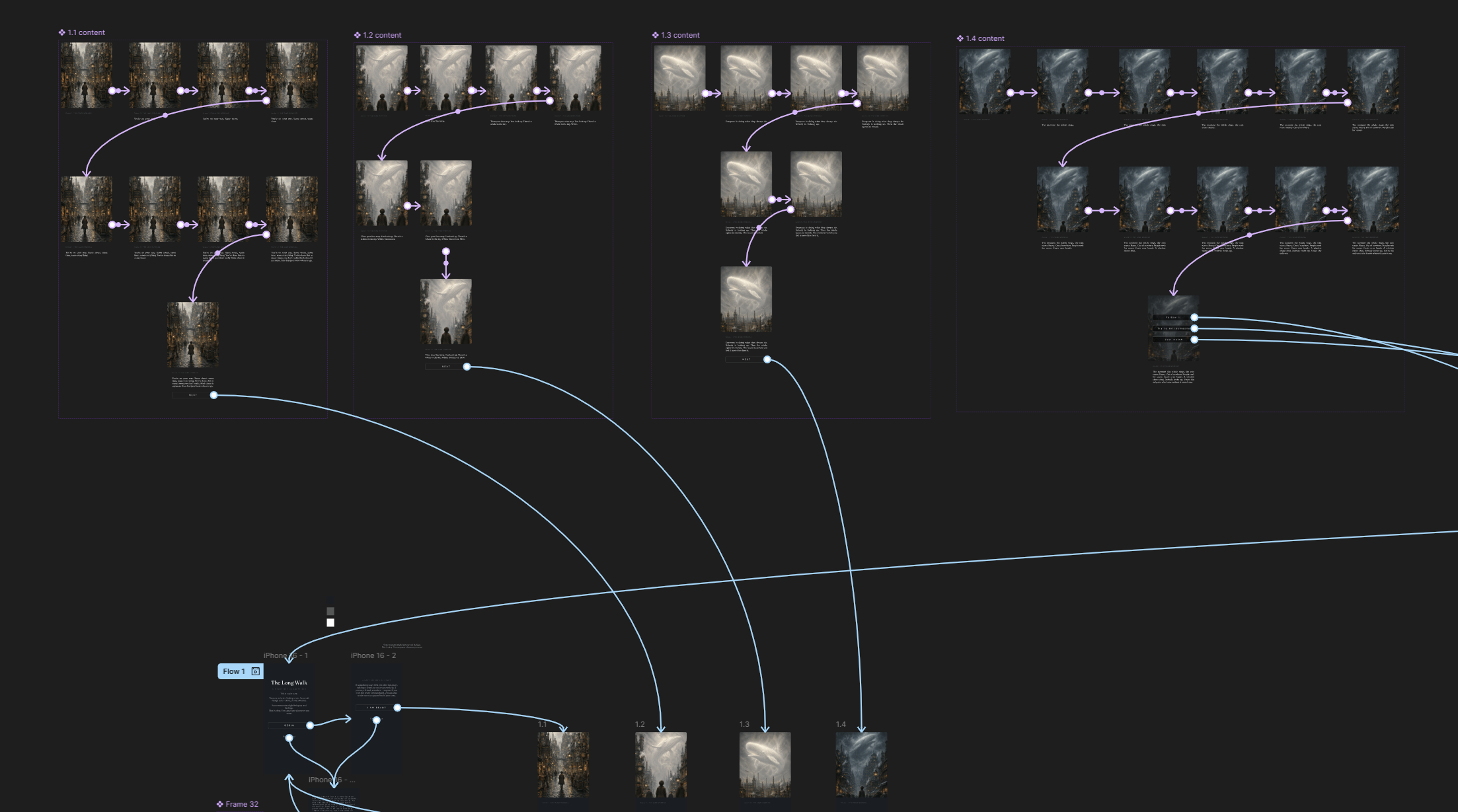
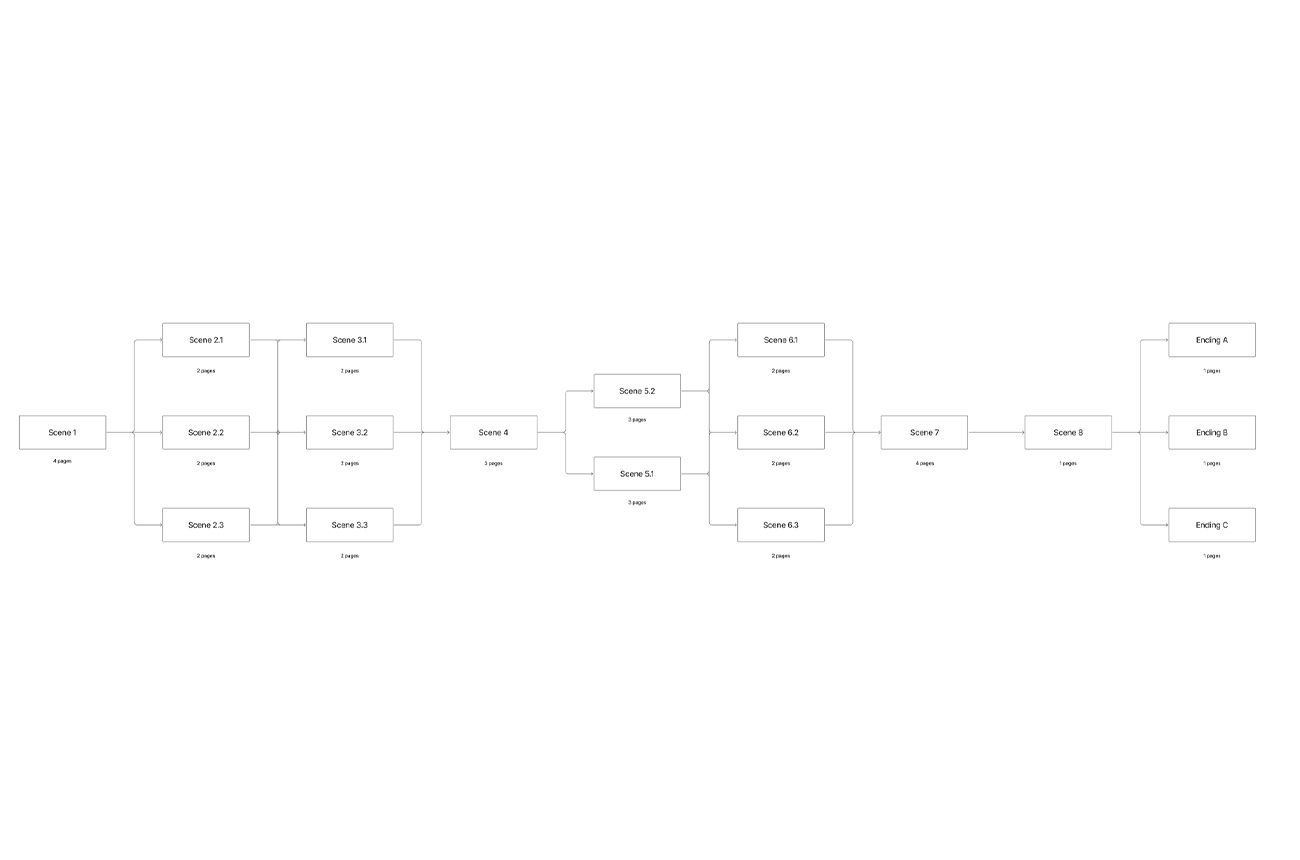
Building a branching structure of eight scenes and three endings, I found that meaningful choice didn't require changing the outcome. It could change how the journey felt. Branches that altered tone rather than destination kept the experience focused and emotionally safe while still giving players real agency, all pointing toward a single turning point: finding the whale resting in a small room.
Branching narrative flow
Prototype
Prototyping tested how text, image, and choice combined on a single screen to carry feeling without words.
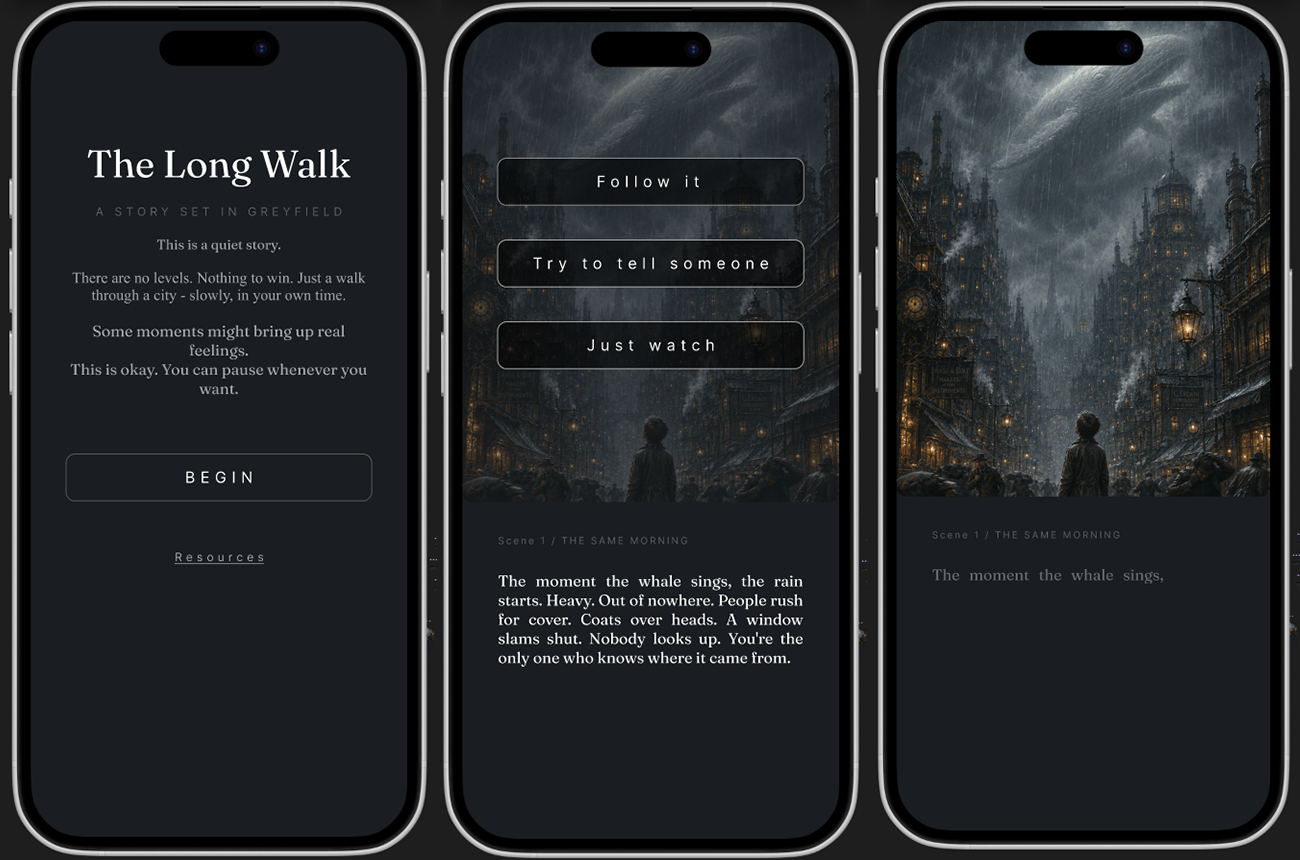
Testers responded most to being given room to sense the feeling themselves. The biggest gains came from refining pacing and making choices feel weightier, not from adding explanation.
Result
Through prototyping and short interview sessions (~20 minutes, combining CERQ-inspired items with UX questions), the signal was clear and consistent. Even with a small number of participants, the feedback validated whether the experience felt safe, whether the central metaphor communicated, and which moment mattered most.
Emotional safety: 5/5 — the experience felt safe to sit inside.
Metaphor comprehension: 4/5 — the whale communicated an unnamed feeling without explanation.
Standout moment: the realization scene — the exact moment the whole design was built toward.
Final Outcome
A fully built, web-based app. After testing, I swapped the "Next" button for a swipe, players swipe to move forward, letting text and image unfold at their own pace, with choices placed directly on the image. Everything leads to the turning point: finding the whale resting in a small room.